Breastfeeding in Tayside reaches highest level since 2003
TUESDAY, 24 NOVEMBER, 2026
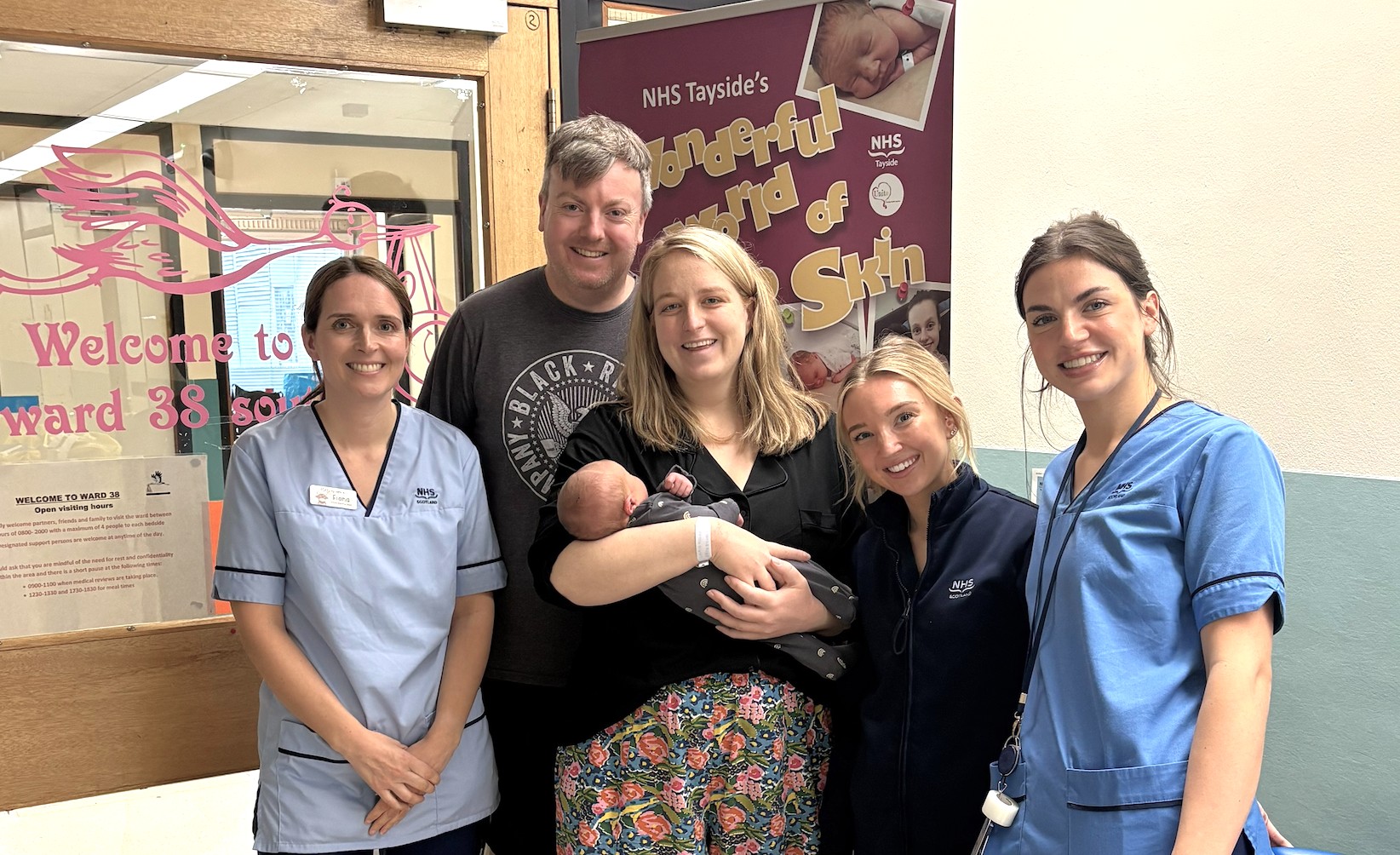
PHOTO ATTACHED: (l-r) Fiona Stewart, Infant Feeding Team, Stephen and Leah McLaren holding baby Rory, with midwives Aimee Panchal and Ashleigh Kerr at Ninewells Hospital
Breastfeeding in Tayside reaches highest level since 2003
More families in Tayside than ever before are choosing to breastfeed their babies, with new figures revealing that breastfeeding rates have reached their highest level since records began more than 20 years ago.
New figures published by Public Health Scotland show a record 70.9% of babies born in the region are now being breastfed at birth.
The latest statistics mark a significant milestone for NHS Tayside and reflect the ongoing work to ensure families have access to the advice, encouragement and the positive impact that dedicated support services can have in helping mothers continue breastfeeding for as long as they wish.
The record-breaking figures come as NHS Tayside successfully maintains UNICEF UK Baby Friendly Initiative accreditation across its Maternity, Health Visiting and Family Nurse Partnership services in 2026. The accreditation recognises the high standards of care and support provided to families and the organisation's continued commitment to helping parents make informed feeding choices.
Alice McInnes, Director of Midwifery and UNICEF Baby Friendly Guardian for NHS Tayside, said, "Maintaining UNICEF Baby Friendly accreditation across our Maternity, Neonatal, Health Visiting and Family Nurse Partnership services is a significant achievement and reflects the dedication and commitment of staff across NHS Tayside.
“We know that breastfeeding can have lifelong benefits for both babies and mothers, and it is essential that families receive consistent, evidence-based support wherever they access care. This accreditation demonstrates our commitment to creating a culture where parents feel informed, respected and supported to meet their infant feeding goals."
Breastfeeding is associated with a range of health benefits for both babies and mothers. For babies, breastmilk provides ideal nutrition and can help protect against infections and illness in the early months of life, while supporting healthy growth and development. Longer term, breastfeeding has been linked to a reduced risk of conditions such as asthma, obesity and diabetes.
For mothers, breastfeeding can support physical recovery following birth and has been associated with a lower risk of some cancers and other long-term health conditions. Increasing breastfeeding rates is recognised as one of the most effective ways of improving health outcomes and reducing health inequalities across communities.
Colleen Carlton, Non-Executive Board Member and UNICEF Baby Friendly Guardian, NHS Tayside, said, “Behind every breastfeeding statistic is a family’s story. These figures are not simply numbers, they reflect the experiences of parents who have been supported to make informed decisions about feeding their babies and to continue breastfeeding for as long as they choose.
“Improving breastfeeding rates is one of the most effective ways we can enhance the health and wellbeing of babies and mothers, helping to reduce health inequalities and deliver benefits that can last a lifetime.”
Families across Tayside are supported throughout their infant feeding journey by a network of dedicated professionals and peer supporters. This includes maternity, neonatal, health visiting and Family Nurse Partnership teams who provide information and practical support both before and after birth as well as
Breast Buddies, a local peer support service which offers encouragement, reassurance and advice from trained volunteers who have lived experience of breastfeeding.
Contact:
Anna Michie
NHS Tayside Communications
(01382) 424138


