When we are pregnant our body accommodates the growing baby in several different ways. One of these is by the connective tissue between our rectus abdominus (the 6 pack muscles) stretching and becoming wider. This stretching and thinning of the connective tissue, known as the linea alba, is common in pregnancy – in fact it will stretch in 100% of pregnancies by 36 week and can continue into the post-natal period. This increase distance is called diastisis recti, also known as DRAM or DRA.
If you have a DRAM you may notice some bulging, doming, coning or dipping of the abdominal muscles or midline when you are doing effortful movements especially such as sitting up from lying, getting out of bed or lifting your baby.
Remember, a 2cm gap between the muscles is considered to be normal. The most important thing to know is that the muscles are activating and working well. Your muscles need to be strong enough to control abdominal movement and support your pelvis and pelvic organs through movement. They also contribute to posture and breathing.
Diastasis Rectus Abdominal Muscle (DRAM)
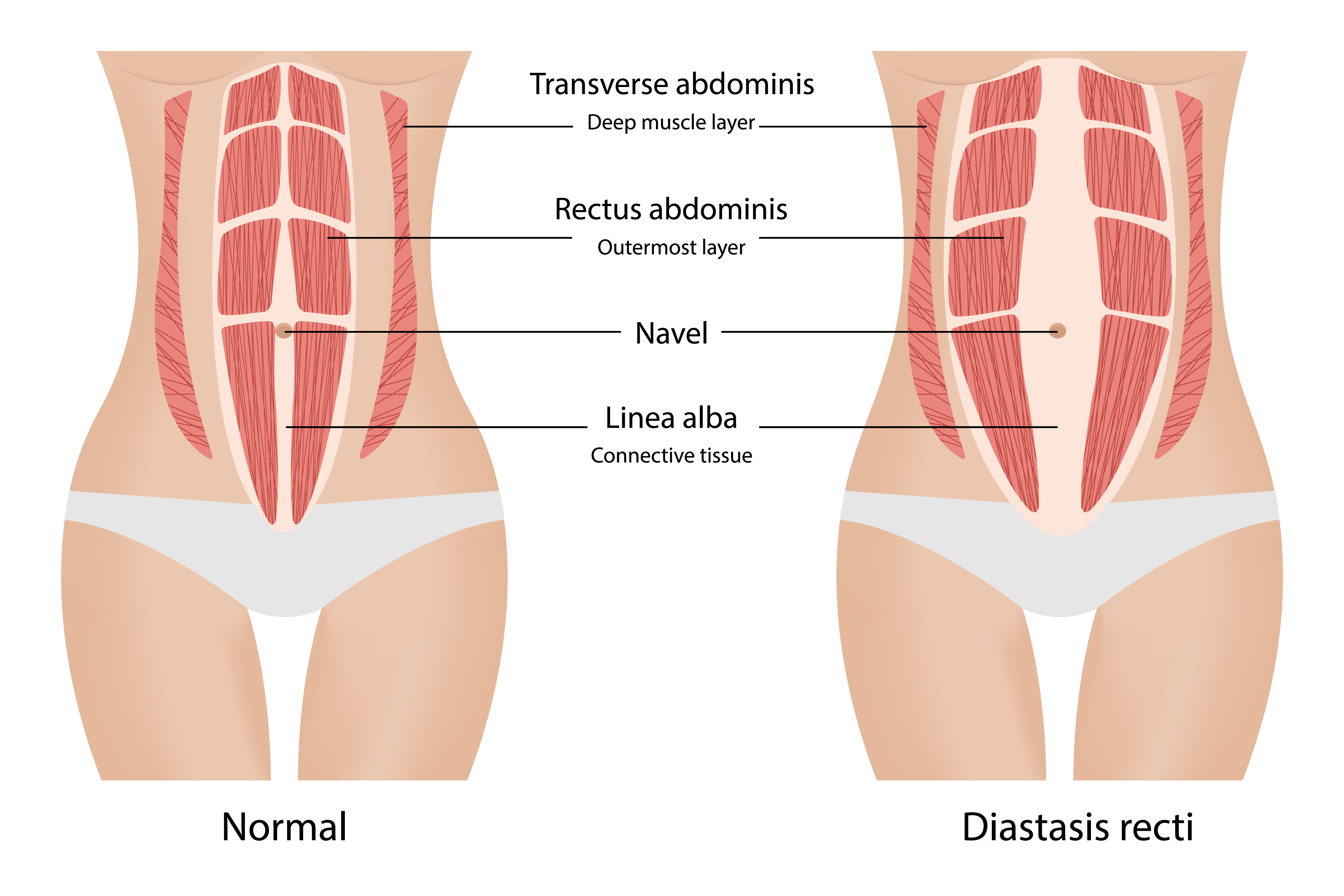
What is a DRAM?
Management of DRAM
Regular exercise before and during pregnancy can be helpful to reduce your risk of developing an ongoing DRAM. In an uncomplicated pregnancy aim for 150 minutes of moderate exercise per week – check out the “exercise during pregnancy” tab for more information.
There is some natural improvement that happens in the first 8 weeks following your delivery. In this time the focus on strengthening should be primarily on abdominal activation, pelvic floor exercises and a gradual return to gentle exercises. More guidance on this can be found in the video below, you can also have a look at the “Lifestyle and physical activity” tab or the POGP pamphlet linked below.
In the first instance it is advisable to avoid exercises and movements that significantly increase your abdominal pressure, such as sit ups, planks, high intensity exercise and repeated heavy lifting however this is not forever – as your strength returns you will be able to return to these activities as desired.
Sometimes a compression garment or abdominal support can be helpful in the early stages – your physiotherapist will help you with guidance on this.
If your DRAM is particularly large or bothersome you will likely be referred through to see a physiotherapist who can assess your abdominal muscles and will give you specific exercises based on your assessment. They will also advise you around pelvic floor strengthening as this can have an effect on abdominal muscle function.
When can I exercise?
You can return to exercise and activity when you feel ready.
We do encourage gentle abdominal exercises and pelvic floor exercises from week 1 post delivery.
Some exercises, particularly as you start more challenging exercise, may need to be modified depending on how your tummy muscles manage the activity.
The above video takes you through a series of exercises to work on your abdominal strength.