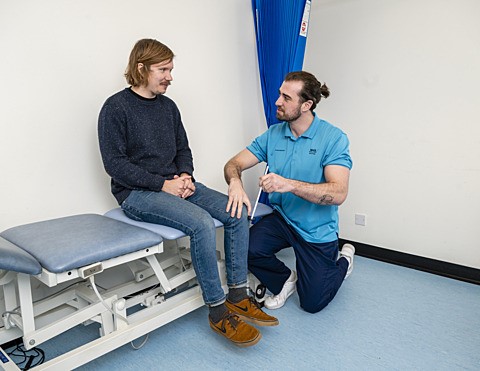
Physiotherapy helps people manage spasticity by improving movement, reducing discomfort and supporting independence. Your Neurology Physiotherapist will assess how spasticity affects your muscles, posture and daily activities, and work with you to set goals that are meaningful to you.
Treatment often includes stretching to reduce stiffness, exercises to strengthen weak muscles, and practising everyday movements to improve function. Advice on posture, seating and positioning can also help you stay comfortable and prevent complications.
Physiotherapists may work closely with specialist services to support other treatments such as medication, botulinum toxin injections or orthotics to help you improve and manage your spasticity.
If you feel you require a physiotherapy assessment, please see the Neurology Physiotherapy - where we are based, and how to refer section for more information about our service. Please see sections below for more information on why spasticity happens, common triggers that can worsen symptoms, and tips and tricks to help you manage your condition.
Spasticity
Spasticity is a common symptom with neurological conditions such as stroke, MS, cerebral palsy and spinal cord injury. This section explains what spasticity is, why it happens, and how physiotherapy can help you manage it.