Eating well offers many benefits, whether your goal is weight loss, fitness, or simply living a healthier lifestyle. A balanced diet helps you feel your best, supports overall health, and can even save you money. It plays a key role in preventing chronic conditions such as heart disease, stroke, type 2 diabetes, obesity, and certain cancers.
Healthy eating means enjoying a balanced and varied diet that includes fruits, vegetables, wholegrains, lean proteins, and healthy fats, while keeping treats to occasional small portions. Making smart swaps, such as choosing lower-fat or lower-sugar options and controlling portion sizes can support energy, mood, disease prevention, and healthy weight. Following the Eatwell Guide and making small realistic changes such as eating more beans, pulses, and oily fish, and being mindful of high-calorie drinks, can lead to lasting improvements. Remember, Healthy eating is about progress, not perfection. Small steps can lead to big improvements in your wellbeing.
1)
How do you feel about your current eating habits?
If the answer indicates a desire to improve their eating habits, encourage simple, achievable changes such as- eating 5 portions of fruit and vegetables daily, choosing wholegrain or higher fibre carbohydrates like brown rice/pasta or wholemeal bread, opting for lower-fat and lower-sugar dairy products and checking food labels to make healthier, informed choices. These small steps can make a big difference over time and can be easy to build into everyday routines.
2) What does a typical day of eating look like for you?
Start by acknowledging their current habits. Then offer small, realistic suggestions based on their goals e.g. if they often drink sugary drinks, suggest swapping one for water or a no-added sugar alternative. This approach helps people to feel supported and empowered to make positive changes at their own pace.
3) Do you know the benefits of eating a healthy diet?
Reflect on their answer and acknowledge that it’s not always easy to make changes. Highlight that small steps can make a big difference and eating a healthy, balanced diet helps you feel your best and lowers the risk of long-term health problems. Suggest quick, achievable tips such as including a variety of different food groups, adding more fibre to stay fuller for longer and increasing our fluid intake to stay hydrated.
4) Have you noticed any changes in your energy levels or mood related to food?
Start by acknowledging how they feel, they might notice things like irritability, mood swings or low energy linked to their current eating habits. Suggest focusing on making one or two small changes e.g. trying to add more fruit & vegetables into their diet to boost their mood and provide essential nutrients or trying to include a balanced breakfast to avoid feeling sluggish and provide yourself with energy to start the day. Small steps can help to improve both physical and emotional wellbeing over time.
5). Is there anything you’d like to change about your diet or lifestyle?
Acknowledge their current routines and feelings to determine if they are open to change, emphasise that lifestyle changes can sometimes be difficult. Share simple messages about the benefits of making a change, for example that eating a balanced diet can help with energy levels and suggest focusing on one change at a time e.g. trying to include one extra fruit or vegetable to their daily intake.
6) Have you ever tried making changes to your diet? What worked well?
Start by acknowledging what worked well for them and assess if they are interested in making further changes. Offer brief advice that is relevant to their situation e.g. if cooking more homemade meals worked well, suggest exploring healthy recipes or using the Eatwell Guide to plan balanced meals. If they’re open to more changes, explain some benefits like improved energy levels, better mood and lower risk of chronic conditions.
7) How important is it for you to eat healthily?
Start by assessing their current habits and any specific challenges they face. Gauge their readiness to make changes and offer simple, targeted advice based on their situation such as reducing their portion sizes, reducing their intake of sugary drinks or adding vegetables to their meals. These small steps can improve health whilst also feeling manageable and realistic.
8) Would you like to improve your diet?
Acknowledge their current habits and goals. If their response indicates a desire for a more nutritious diet, offer simple suggestions such as adding more fruit and vegetables, choosing wholegrain carbohydrates, and including a source of protein with meals, such as beans, pulses, fish, eggs, or lean meat. These foods can help keep you feeling fuller for longer and may help to manage hunger between meals. Suggest exploring the Eatwell Guide for more information on building a balanced diet.
9) Do you check the labels on food packaging when you are shopping to help you make healthier choices?
If they already check food labels, acknowledge their effort. If not, explain how labels help make healthier choices by focusing on colour-coded traffic light labels and the ingredients list. Many products use red, amber, and green to show fat, sugar, and salt levels (red = high, amber = medium, green = low). Encourage choosing more greens and ambers, and fewer reds. Ingredients are listed by weight, so for example if sugar appears near the top, it’s a key ingredient. Signpost to the NHS Food Scanner App, which makes understanding labels easier and suggest trying it next time they shop.
10) What do you usually drink throughout the day?
Start by acknowledging their response and explore if they’re open to discussing drinking habits. Tailor advice to what they share, for example, if they often have sugary drinks, suggest swapping one for water, sugar-free options, or milk. Offer simple tips- aim for 6–8 glasses of fluid daily, limit fruit juice or smoothies to 150ml per day (and consume with meals to protect teeth) and choose diet or no-added-sugar drinks to reduce sugar intake. Emphasise that small changes can lead to big improvements over time.
In response to the conversational questions, the following information can be suggested to support your patient to improve their diet -
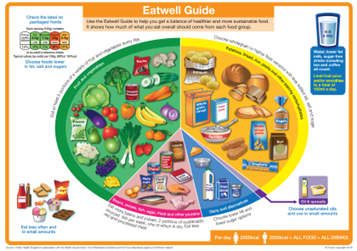
Eating a balanced diet (the Eatwell Guide)Healthy eating is about having a balance of different foods and nutrients in the diet for good health and wellbeing. No single food or food group can provide everything we need to be healthy. Eating a variety of different foods from each of the food groups can help us get the full range of nutrients our bodies need.
Explain that the Eatwell Guide is a tool that illustrates the proportions of different food groups for a healthy balanced diet.
The Eatwell Guide encourages us to
• Aim to eat at least five portions of fruit and vegetables each day - they provide essential vitamins, minerals, and fibre that are vital for good health. Fresh, frozen, canned, and dried all count- choose canned versions in water or natural juice and have dried fruit with meals.
• Base meals on potatoes, bread, rice, pasta or other starchy carbohydrates choosing wholegrain options where possible for added fibre. Starchy foods are a key source of energy and nutrients and should make up just over a third of what we eat.
• Include beans, pulses, fish, eggs, meat, and other proteins in your diet (including two portions of fish each week, with one being oily e.g. salmon, sardines, mackerel). Choose lean cuts of meat and reduce red and processed meats like bacon, ham, and sausages. Pulses such as beans, peas, and lentils are great alternatives to meat because they’re low in fat, high in fibre, and often more affordable.
• Include some dairy or fortified dairy alternatives (such as soya drinks and yoghurts), choosing lower-fat and lower-sugar options where possible. Milk, cheese, and yoghurt are good sources of protein, vitamins, and an important source of calcium, which is essential for healthy bones. If opting for plant-based alternatives, choose those fortified with calcium and ideally other vitamins and minerals.
• Choose unsaturated oils and spreads and have in small amounts. Unsaturated fats such as vegetable, rapeseed, olive, and sunflower oils are healthier options. Fat is an essential part of a balanced diet, helping the body absorb vitamins and providing essential fatty acids it cannot produce. However, it’s important to remember that fat is high in energy, so keep portions small.
• Aim for 6–8 cups or glasses of fluid daily. Water, lower-fat milk, sugar-free drinks, tea, and coffee all count, as do foods with high water content like soups and fruit. Fruit juice and smoothies also count, but because they contain free sugars that can harm teeth, limit them to 150ml per day and have them with meals.
• Eat foods and drinks high in fat, sugar and salt less often and in small amounts. They’re not essential in our diet, so should be eaten less often and in smaller amounts.
Choose a variety of foods from each group to get the nutrients you need for good health. You can use the Eatwell Guide to make healthier choices when planning meals, cooking at home, shopping, or eating out. The guide shows the types of foods and drinks to include and the proportions to aim for each day or over the course of a week.
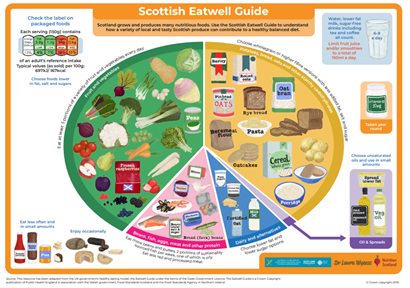
The Scottish Eatwell Guide uses the same principles as the standard Eatwell Guide but reflects foods grown and produced in Scotland. While the proportions of food groups and healthy eating messages remain the same, examples include Scottish fruits and vegetables, oats, barley, venison, and crowdie cheese. It helps show how local, nutritious foods fit into a balanced diet.
Portion Sizes - Eating a balanced diet and the right portions is key to a healthy diet and weight. A portion refers to the amount of food in one serving, and requirements vary by age, size, and activity level. Aim to have a variety of foods from the main food groups in sensible portions to meet your calorie and nutrient needs. Portion sizes differ across food groups, which can be confusing, but a simple way to estimate is by using your hands to measure food.
While weighing food is most accurate, using your hands or spoons is an easy alternative. The British Nutrition Foundation offers practical hand-based guides to help adults and children manage portion sizes throughout the day, making healthy eating simpler and sustainable.
BNF -
Portion sizes | British Nutrition Foundation 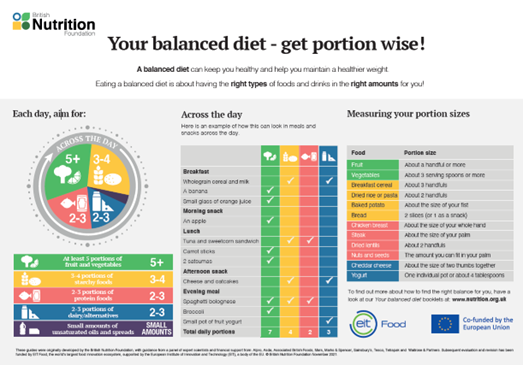
Food Labels-Food labels provide key information to help you make healthier choices. They show levels of saturated fat, sugar, salt, and calories, often using traffic light colours- red, amber, and green, to indicate high, medium, or low amounts. Aim for more greens and ambers, and fewer reds.
Nutrition labels, usually on the back or side of packaging, can help you compare products and monitor intake of high-fat, salt, and sugar foods. If you're choosing foods and drinks that are high in fat, salt and sugar, have these less often and in small amounts.
The ingredients list can also help you work out how healthy the product is as ingredients are listed by weight, so if high-fat items like butter or oil appear first, the product is likely high in fat. Using labels supports a balanced diet and better health.
(Provide NHS Tayside ‘Food Shopping Card’)-
NHST Food Shopping CardVitamin D-
Everyone, including children, should consider taking a daily supplement of 10 micrograms (μg) of vitamin D, especially during the autumn and winter months (October–March).
Some groups of people are advised to take it year-round e.g. all pregnant and breastfeeding women, infants and children under 5 years old (unless they are consuming more than 500ml infant formula per day), people aged 65+ or have darker skin tone and individuals with little or no sun exposure.
Sunlight is the main source of Vitamin D. Food sources of vitamin D are -
- oily fish such as salmon, sardines, herring, and mackerel
- egg yolks
- red meat
- liver (avoid liver if you are pregnant)
- some mushrooms
- infant formula
- foods fortified with vitamin D, such as breakfast cereals, fat spreads, and unsweetened soya 'milk
Why supplement? It’s difficult to get enough vitamin D from food alone, and sunlight is insufficient in autumn/winter.
Government advice: All adults and children, including pregnant and breastfeeding women, should take supplements during autumn/winter.
Access: You can purchase supplements, or vitamin drops containing vitamin D (for under 5s) at most pharmacies and supermarkets. Midwives and health visitors may provide to pregnant and breastfeeding women.
Provide NHS Tayside ‘Vitamin D and You’ leaflet -
Vitamin D and You.Fibre -
Dietary fibre is essential for health at every age, yet most people are failing to meet the recommended guideline of 30g per day. Fibre-rich foods are filling, lower in calories, and help control appetite. Eating plenty of fibre is associated with a lower risk of heart disease, stroke, type 2 diabetes and bowel cancer.
Health Benefits of Fibre -
• Promotes a diverse gut microbiota
• Eases constipation and lactose intolerance
• Strengthens immunity
• Reduces gut inflammation
Top Tips to Boost Fibre-
• Choose high-fibre cereals (e.g., Weetabix, porridge, bran flakes)
• Opt for wholegrain carbohydrates (wholewheat pasta, bread, rice, potatoes with skins)
• Add pulses like beans, lentils, and peas to meals
• Eat at least 5 portions of fruit and vegetables daily
• Snack on fruit, vegetable sticks, oatcakes, crackers, unsalted nuts, or seeds