Walking Aids
Walking aids can provide additional support if you are having difficulty with your mobility, balance or confidence when walking.
There are many different types of walking aids available. The most suitable option for you will depend on your individual needs, physical abilities, goals and where you plan to use the walking aid.
A physiotherapist, occupational therapist or support worker can assess your mobility and help identify which type of walking aid may be most appropriate for you.
Types Of Walking Aids
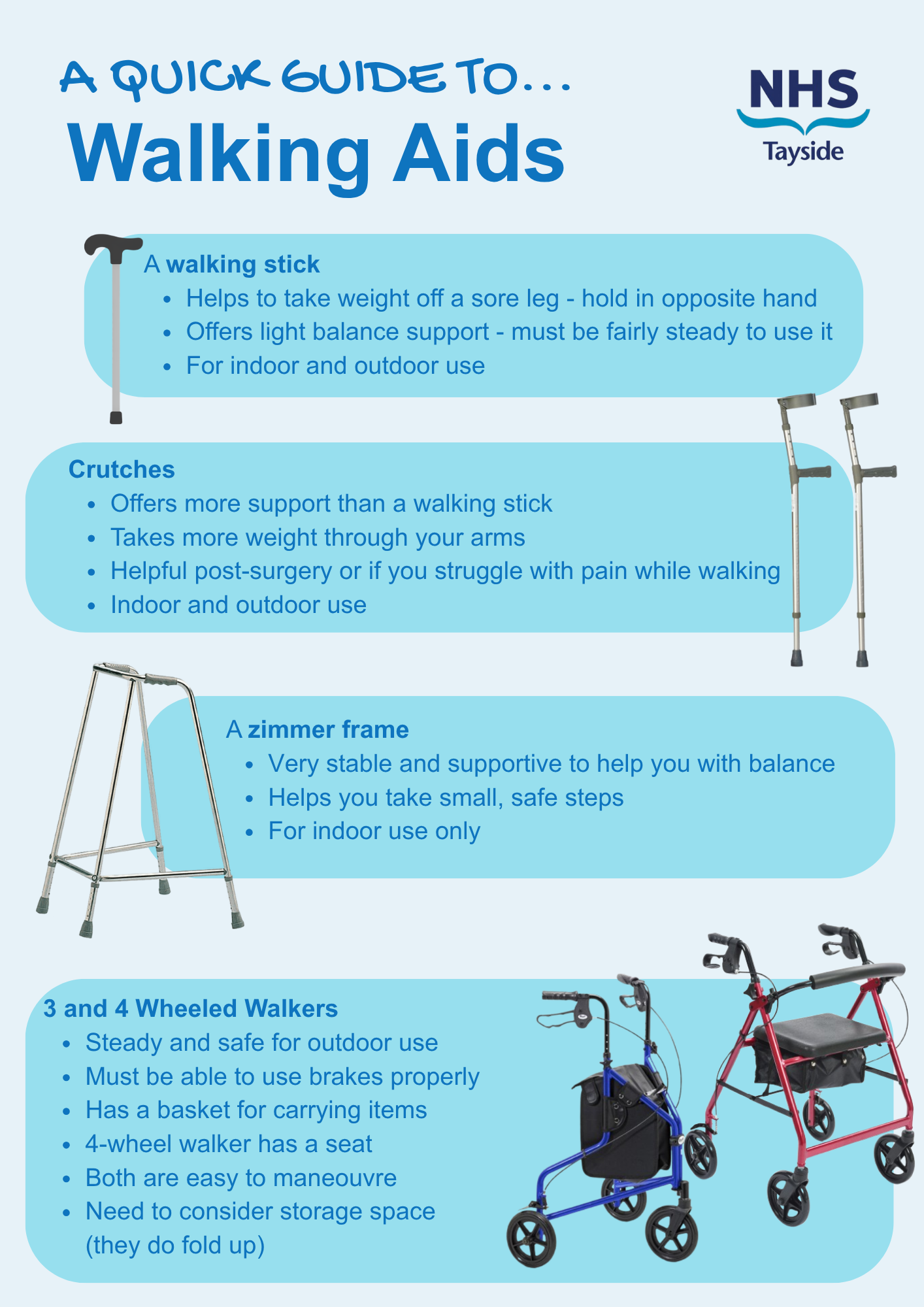
There are several different types of walking aids. These include:
- Walking sticks.
- Elbow crutches.
- Walking frames.
- Three-wheeled walkers.
- Four-wheeled walkers.
The most appropriate walking aid will vary from person to person. For example, the type of support you need may be different depending on whether you are using an aid to improve your balance, reduce pressure on a painful leg or increase your confidence when walking.
Using Your Walking Aid Safely
It is important to learn how to use your walking aid correctly.
A physiotherapist, occupational therapist or support worker can provide individualised advice based on your needs and show you how to use your walking aid safely.
You can also find further information below, provided by NHS Lanarkshire and NHS inform, click the links for hints and tips around using a walking and also to see videos demonstrating the correct technique:
How to use a walking stickHow to use crutchesHow to use a walking frameHow to use a three-wheeled walkerHow to use a four-wheeled walkerHow Do I Get A Walking Aid?
If you think you need a walking aid, the most appropriate route will depend on your individual circumstances.
Assessment at home or in clinic
If your mobility is limited and you are unable to leave your home, you may be able to have your mobility assessed at home.
A physiotherapist, occupational therapist or support worker can assess your walking and mobility and determine whether a walking aid is appropriate for you.
You may also be provided with advice and an exercise-based treatment plan where required.
For people living in Dundee, if you are safe enough to attend clinic as an outpatient, you may also be seen in our Outpatient clinics at Royal Victoria Hospital or Mackinnon Centre in Broughty Ferry.
[Insert link to Community Physiotherapy self-referral form]
You may also be able to access support through Community Occupational Therapy or Dundee Social Work Occupational Therapy, depending on your individual needs.
[Insert link to Occupational Therapy information]
Returning Equipment
NHS Tayside encourages the return of equipment that is no longer needed.
Returned equipment can be cleaned, checked, repaired where necessary and reused by someone else.
You can arrange for equipment to be collected by calling the telephone number displayed on the equipment.
Alternatively, equipment may be returned to the Dundee Independent Living Centre.
You can arrange collection by contacting the Dundee Independent Living Centre on: 01382 307645.
Checking Your Walking Aid
It is important to check your walking aid regularly.
Your walking aid should feel steady and secure, with no obvious signs of damage or excessive wear and tear.
Check for:
Loose or damaged parts
Worn rubber ferrules or feet
Damaged wheels or brakes
Loose handles
Any other changes that affect how safe or stable the walking aid feels
If your walking aid is damaged or does not feel safe to use, seek advice about having it repaired or replaced.
If you received your walking aid from a hospital or NHS healthcare provider, you can arrange to have damaged walking aids replaced by contacting: 01382 307645.